Creative Leadership Observatory: Diane Ragsdale and the Resurgence Leadership Articles
Updated: Sep 9, 2024
Hello readers, this is my first blog post for a 15-week graduate course on Creative Leadership, calling these series of writings our “Creative Leadership Observatory”. According to Wikipedia, An observatory is a location used for observing terrestrial or celestial events. Astronomy, climatology/meteorology, geophysical, oceanography and volcanology are examples of disciplines for which observatories have been constructed." More recently, however, academia has appropriated the concept of observatory to describe an online space that showcases a variety of data and resources related to a particular topic. Here we will embark on that journey!
First, I will say, I have been dying to take this class. At this juncture of my graduate degree, I have actually met all the coursework requirements, but this class never seemed to work with my schedule. I’ve been so intrigued by the topic, that I couldn’t pass up the opportunity to take it anyway. I am especially curious to see how these learnings differ from the methodologies are leadership I learned while earning my MBA a few years ago.
In this week’s readings, we read several articles from Resurgence Magazine, and one in particular stood out to me which was called From Hero to Host. I liked the idea of Hero to Host model of leadership. It’s true that we often think of “great” leaders in a hero light. The idea of switch to “host” is to me another way to think of the more common idea of “Servant Leadership”. In that same article, I liked that there was an emphasis placed on the fact that leaders are humans too, that are prone to vulnerabilities. We often place leaders up on a pedestal and think they should be all knowing. But the reality is that they certainly are not, and can make mistakes. Acknowledging this fact is important for successful leadership, as it builds connection to show vulnerability, as well as allows the group to feel they can contribute in successful leadership. This idea aligns with the “host” stance.
Additionally, we read articles by Diane Ragsdale on the Value of Creating Pathways to the Unforeseen. This article takes an interesting approach to how we think about problems. It acknowledges that to truly solve problems with no known solution, one should be open minded to being comfortable stepping into the unknown. As she says, “allowing chance events to influence the work, beginning without a plan or articulated end in sight) does seem to be common among many artists”. This was an interesting contrast to a more common business strategy mindset of being well-planned. As she says, “the world of business could use less MBA’s and more creative thinkers” (speaking of MBA).
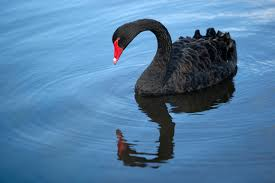
However, as with anything, there should be a balance. Hence, she acknowledges the concept of emergent strategy. I personally resonate with this idea, and think of it as “planned agility”. Meaning I am being strategic and thoughtful, knowing I am headed into unknown territory, and plan to agile in that uncertainty. I take this stance in my own personal creative work, as well as the world of business, and the business world changes so fast today, that one cannot rely on “what has been done before”. This coincidentally ties back well to a book I’m reading called Black Swan: The Impact of the Improbable. This book, Jeff Bezos allegedly required all his Amazon executives to read in those early days of the internet giant. This alone says something about the success that can come from embracing uncertainty.


Comments